
Understanding Reciprocity with the Natural World Through Surfing
Version 2: December 2025
Ch 1 - Recognition of life
Ah, surfing. Let’s start if off by talking about control.
My relationship with water began the same way many Western relationships with nature begin: with dead water. Chlorinated, sterilized, contained in a plaster hole. Water reduced to a tool — something engineered for training, for hygiene, for human use. I grew up moving through it without ever thinking about it. In this controlled form, water had no autonomy, no agency. It couldn’t resist or surprise. It could only serve. And because it never acted on its own terms, I never learned to see it as alive. I forgot it ever was.
Could water ever be something more than a resource at our disposal? More than a backdrop for pretty moments or a medium to clean ourselves? I’d heard surfers and water gurus say “water is life,” but it always felt abstract — something true for them but not yet for me.
My own relationship with water didn’t change until I met the ocean on its own terms.
Swimming taught me to conquer water — to perfect its resistance, crack its code, and use its predictability as proof of my own strength. But surfing is the opposite. Surfing is not about domination; it’s about attunement. A wave is nothing more than energy transferring from one water molecule to another across miles of ocean, yet that energy carries its own logic, its own personality, its own will. Surfing requires developing a sense that lives under the skin instead of inside the mind — a language that doesn’t rely on articulation or reasoning, only presence, feeling, and response.
Somewhere along the way, I realized something bigger:
We didn’t lose our connection to nature. We lost the language that connection depends on.
Compared to the dead, obedient water I’d spent my whole life swimming in, I had never imagined water could hold a relationship with me beyond usefulness. But surfing reintroduced me to water that couldn’t be managed or tamed — water with agency, unpredictability, and life. And recognizing its aliveness required letting go of control.
Ch. 2 - Presentness
Every surfer I know is obsessed with surfing. They say things like:
“I wish I was surfing right now.” “I’m going out at sunrise before brunch.” “The sunset looks insane — I wish I was in the water.”
From the outside, I assumed they were chasing adrenaline, like runners or weightlifters who fall in love with pushing limits. I thought I knew what they were chasing.
Growing up as a swimmer and water polo player in Southern California, trying surfing seemed like a logical next step — a new challenge, a new version of a sport I already knew. Maybe I’d even be good at it. Maybe “surfer girl” would be a cool aesthetic.
But surfing did something I never expected: it changed what being human feels like.
Unlike competitive sports, surfing has no clear line between training and performing. Yes, you get better, learn new turns, experiment with different boards. But your value as a surfer isn’t measured by skill within a hierarchy. The only real currency is presence. Not perfection. Not domination. Not comparison. Presence.
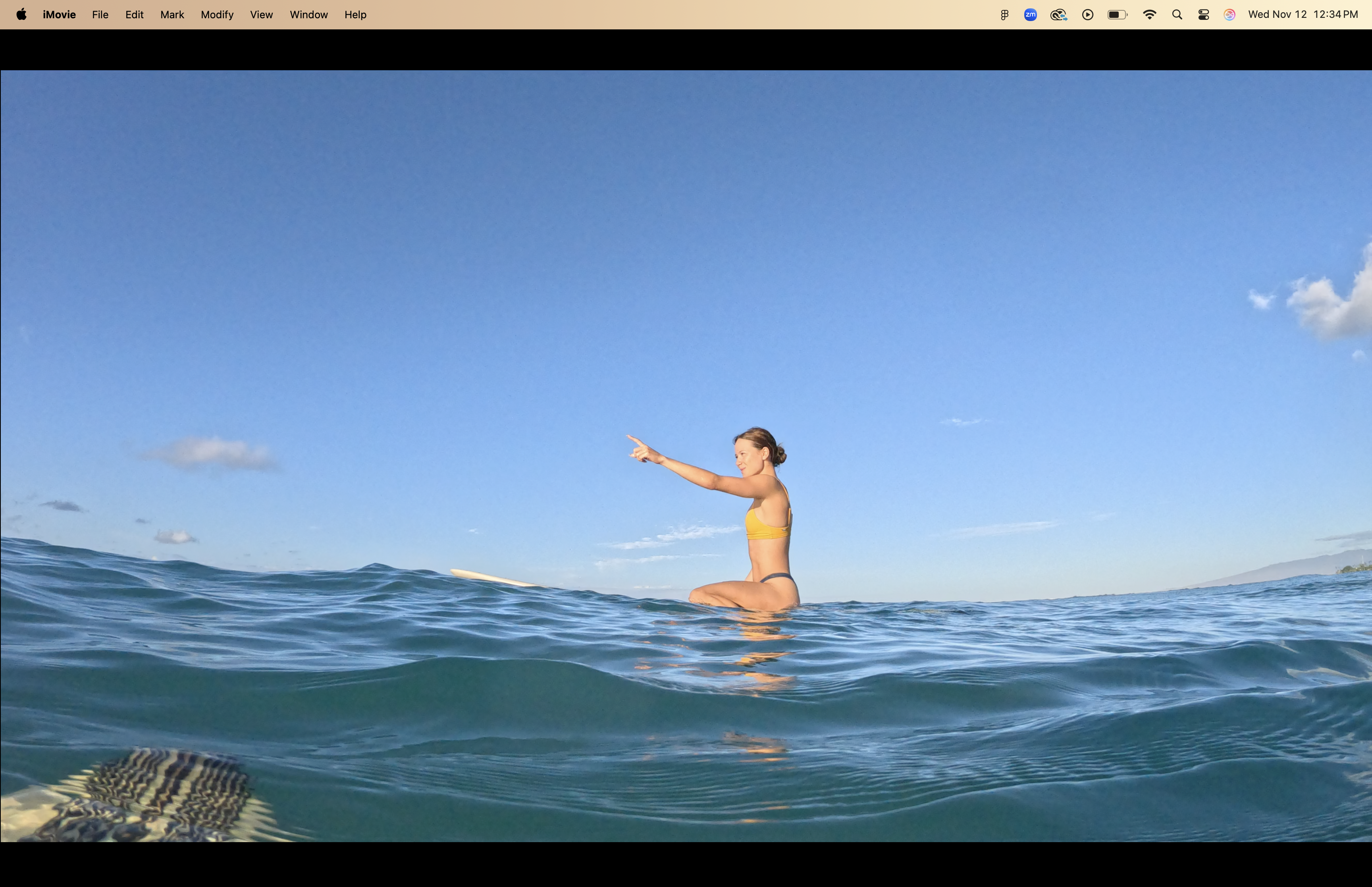
To surf well, you have to notice things — subtle shifts of wind, rhythm in the sets, the mood of the water. Over time, that noticing becomes appreciation, which becomes love, which becomes respect, which becomes the desire to protect. It sounds silly, but you begin to feel the ocean as a living force that cares for you back. Each wave becomes a small moment of shared agency — the wave carrying its own autonomy, you carrying yours, meeting at the surface of the board. It’s romantic.
Surfing is addictive because you enter a world where everyone is attuned to something bigger than themselves. There’s a lightness and mysticism in the air at surf breaks. Even when you travel far from your local spot, that unity of appreciation remains. No matter the language or income level, surfers share a devotion to this living force.
But nothing compares to your home break. When you return over and over again, present and attentive, you begin recognizing the non-human community that lives there. The same pod of dolphins. The same family of crabs beneath the same cluster of rocks. The kelp becomes something like a roommate — not scenery, but someone who lives there with you, someone who was here before you. It shifts your sense of place completely. You stop seeing nature as background, and start seeing yourself as a guest in a home you share with others.
What exists here is a complex symbiosis of species and forces. And what it feels like to be part of that world transcends any belonging I’ve felt within human society. It’s bigger.
I could spend my whole life trying to articulate the glow I feel in my chest when I’m in that space — but nothing will ever compare to the feeling itself. That glow is what makes me say, “I want to go surfing tomorrow.” It’s the feeling of doing what you love, in a place you love, with beings who love being there too.